Beginner workshop · 28–29 November
Design a tea-light holder that paints with light.
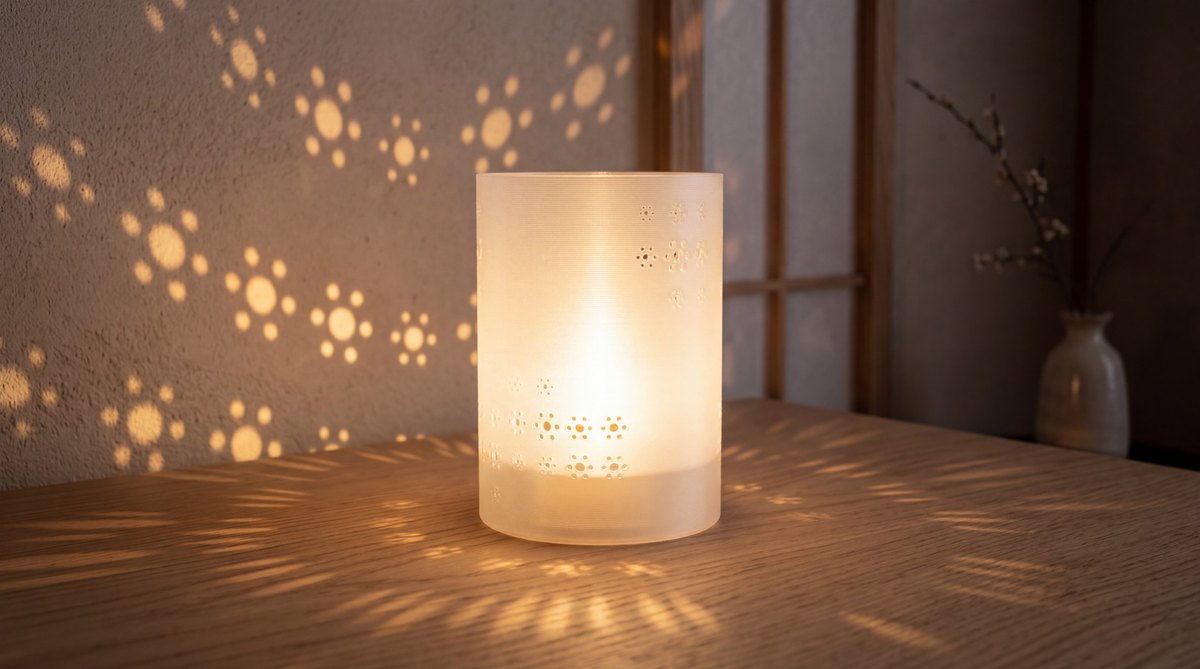
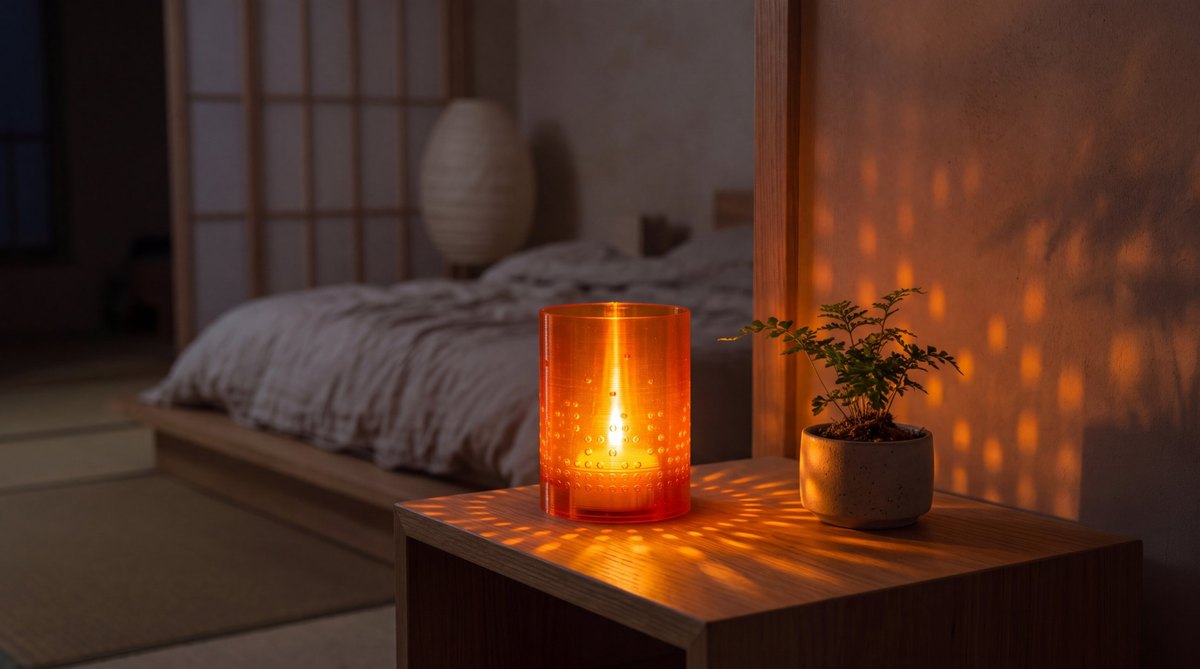
Every piece in these photographs came out of the same graph.
The idea
In two days you'll build a small design system in BeeGraphy — a handful of connected steps that turn a cylinder, a hole and a few numbers into a tea-light holder. Then you change one number and get a different one. Then another.
By the end you'll have a file that produces a whole family of objects, a printed piece on the table, and a reasonably good idea of why computational design is worth your time.
Two days, two builds


What you'll learn
What a node graph is, why designers use one, and how a change at the start ripples all the way to the object.
A cylinder with a height and a diameter you control — your first two numbers, and the first time the model answers back.
A single hole, properly cut through the wall. Getting one right is most of the work; the rest is arithmetic.
One opening becomes a field of them, wrapped around the shell. Count, spacing and size all become things you can dial.
The part people remember. The openings stop being evenly spread and start responding — gathering, thinning, drifting, fading — because you told them what to respond to.
Export, slice, print, and the moment it's worth doing: switch the room light off and see what your numbers actually made.

Try the idea
Hover it and it lights whole. Point at the table and the openings crowd that way. Drag the slider and there are more of them — which is the whole workshop in three gestures.
Same graph, different numbers


The details
First 5 registrations
₹1,500
Thereafter
₹1,800
How the days run
Foundations, then the object. The morning builds the thinking away from the screen; the afternoon turns it into a patterned tea-light holder.
| 10:00 | Welcome — what computational design actually is |
| 10:20 | The geometric alphabet: points, curves, surfaces, and how a computer holds them |
| 11:00 | How a parametric system thinks — inputs, logic, outputs, and the canvas itself |
| 11:40 | Your first working model: a shape that answers to sliders |
| 12:30 | Keeping track of many things at once |
| 13:10 | Break |
| 13:55 | The body — height and diameter under your control |
| 14:25 | One opening, repeated all the way around |
| 15:05 | Let the holes follow your choice |
| 15:45 | Cut the openings through for real |
| 16:15 | Check it, export it, and see it sliced for printing |
| 16:40 | Close — retrace the whole arc of the day |
The same thinking, a new technique. Yesterday's logic rebuilt for laser cutting — flat parts that slot together around the light.
| 10:00 | Recap, and the object we're making today |
| 10:20 | Build one piece from points — move, mirror, join |
| 11:00 | From one piece to a family of them |
| 11:40 | The same choice logic as yesterday, a completely different result |
| 12:20 | Designing for the cutter: kerf, slots, and why the fit is the design |
| 13:00 | Break |
| 13:45 | Nesting on the sheet, and what makes a file cut cleanly |
| 14:30 | Export a cut-ready file |
| 15:00 | Yesterday's prints, revealed and lit |
| 15:30 | Assembly, and what makes a joint actually work |
| 16:00 | Final showcase — light everything, compare, photograph |
| 16:40 | Close |
Day 2 is in prototyping — the shape of the day is fixed, the exact object is still being refined.
Before you ask
Yes — that's the audience we built it for. We start from what a node is. If you can follow a recipe and you're willing to be wrong for the first hour, you'll be fine.
Yes — every participant takes home a printed tea-light holder. Your own file is yours to keep and print whenever you like.
A laptop — effectively required, since you'll be building for most of both days. Anything that runs a current browser works; BeeGraphy runs in the browser, so there's nothing to install beforehand. Tell us on the form if you can't arrange one and we'll try to sort something out.
Day 2 builds directly on Day 1, so the pair is the workshop. Write to us if your weekend genuinely only has one day in it and we'll see what's possible.
Fill in the registration form first. We'll reply with UPI details, the exact address and what to expect — your seat is held once payment is in.
Yes — a BeeGraphy certificate of completion for both days, plus your graph, your export files and an open invitation to keep using the platform afterwards.

Register
Two days, 28–29 November, in Vasant Kunj. The first five seats are ₹1,500; registration closes on 24 November.